
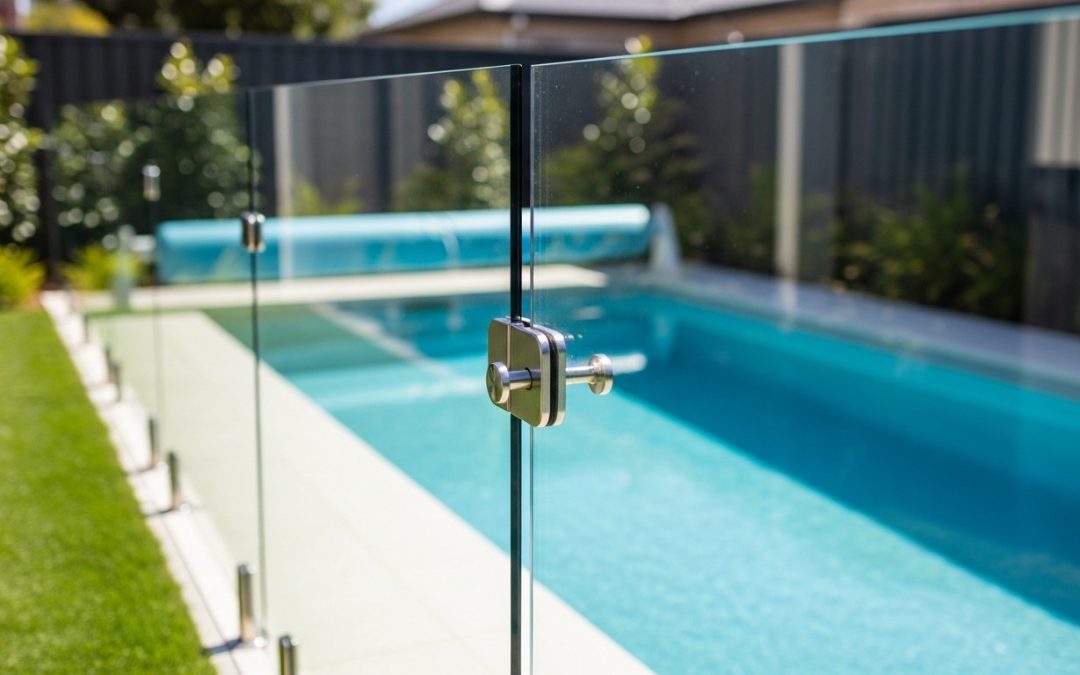
Adelaide’s warm climate makes swimming pools a fantastic addition to many homes, offering endless enjoyment for families. However, with that enjoyment comes a significant responsibility: ensuring the highest level of safety, especially for children. When considering glass pool fencing, understanding its essential child-safe features is paramount. This article will focus specifically on the core elements designed to prevent unsupervised access by children, offering insights for homeowners and builders in Adelaide. For a broader overview of frameless glass pool fencing solutions, you can explore our comprehensive guide.
The Foundation of Pool Safety: Self-Closing and Self-Latching Gates
Perhaps the most critical component of any child-safe pool barrier is its gate. In Adelaide, and across Australia, regulations are strict because gates are often the weakest link if not properly designed and maintained. Child-safe glass pool fencing integrates gates that are engineered to close and latch automatically after being opened. This isn’t just a convenience; it’s a fundamental safety mechanism that prevents a gate from being accidentally left ajar, which could provide an opening for a child to access the pool area unsupervised.
- Automatic Closure Mechanism: These systems typically use hydraulic hinges or spring-loaded mechanisms that gently but firmly pull the gate shut. The design ensures it closes fully every time, removing the human error factor of forgetting to close it.
- Reliable Self-Latching: Once closed, the gate must also self-latch without manual intervention. This latch needs to engage securely, requiring a deliberate action to open it again. This dual function of self-closing and self-latching is non-negotiable for effective child safety around pools.
- Regular Inspection: While robust, these mechanisms still benefit from periodic checks to ensure they’re functioning correctly, especially after heavy use or during seasonal changes.
Strategic Latch Placement: Beyond a Child’s Reach
Even with a self-latching gate, the position of the latch itself is another crucial safety feature. To prevent young children from being able to operate the latch, it must be installed at a specific height that is out of their reach. Australian standards typically dictate a minimum height for pool gate latches, ensuring that a child cannot easily open the gate, even if they were to try.
- Minimum Height Requirements: Latches are generally required to be at least 1500mm (1.5 meters) from the ground. This height makes it extremely difficult for toddlers and young children to reach and manipulate the latch.
- Inward Opening Gates: Many safety standards also recommend or require pool gates to open inwards, away from the pool area. This design can add another layer of protection, as a child pushing against the gate from the outside would only further secure it against the fence line.
- Security and Design: Modern latches are often magnetic or incorporate sophisticated locking mechanisms that are both secure and blend seamlessly with the aesthetic of glass fencing installations, maintaining the sleek appearance while prioritizing safety.
Non-Climbable Design: Eliminating Footholds
A key advantage of glass pool fencing from a child safety perspective is its inherent non-climbable nature. Unlike some other fencing materials that might offer horizontal bars, mesh, or decorative elements that could serve as footholds, glass panels present a smooth, continuous surface. This design significantly reduces the risk of a child attempting to climb over the barrier to access the pool.
- Smooth, Vertical Surface: The flat, uninterrupted surface of glass panels provides no handholds or footholds, making it virtually impossible for a child to scale. This is a primary reason why glass pool fencing Adelaide is a preferred choice for many families focused on pool safety.
- Minimal Gaps and Protrusions: Beyond the panels themselves, a truly child-safe design minimizes any gaps or protrusions that could be exploited. This includes careful consideration of gaps between panels, between the fence and the ground, and any adjacent structures.
- Maintaining Clear Zones: It’s also vital for homeowners to maintain a clear zone around the pool fence, ensuring there are no climbable objects (like chairs, planters, or play equipment) within 900mm of the barrier that a child could use to gain leverage.
Minimizing Gaps: No Room for Squeezing Through
While the large glass panels naturally limit gaps, attention to detail in installation is vital to ensure no small openings exist that a child might squeeze through. This applies to the space between panels, between the bottom of the fence and the ground, and around any posts or structural elements.
- Precise Panel Spacing: Professional fencing installers Adelaide ensure that the gaps between individual glass panels are kept to a minimum, typically no wider than 10mm. This precision prevents a child from passing through or getting stuck.
- Ground Clearance: The gap between the bottom of the glass fence and the finished ground level is also regulated. It’s usually kept to a maximum of 100mm to prevent children from crawling underneath. This clearance also allows for proper drainage and cleaning.
- Adjacent Structures: Special care is taken when the fence meets existing walls, columns, or other structures to ensure there are no compliant gaps that could be used for access or climbing.
The Role of Professional Installation in Adelaide
Even the most advanced child-safe features in glass pool fencing are only as effective as their installation. Proper installation is fundamental to ensuring that all safety mechanisms function as intended and comply with local Adelaide regulations. Experienced glass fencing professionals understand the nuances of these standards and how to implement them practically.
- Regulatory Compliance: Professional fencing installers Adelaide are familiar with all relevant Australian Standards and local council requirements for pool safety barriers. This ensures your fence will pass inspection and provide compliant protection.
- Structural Integrity: Correct installation ensures the fence is sturdy and durable, capable of withstanding various conditions and impacts without compromising safety. This includes proper anchoring of spigots and hinges.
- Optimal Functionality: Only with precise installation will self-closing gates operate smoothly and latches engage securely every single time. Misalignment, even minor, can compromise these critical safety features.
For homeowners and builders in Adelaide, prioritizing these essential child-safe features in glass pool fencing is a vital step in creating a secure pool environment. It’s about combining intelligent design with expert execution to protect what matters most. For more detailed information on specific glass pool fencing options and how they can be tailored to your property, we encourage you to connect with experienced providers.