
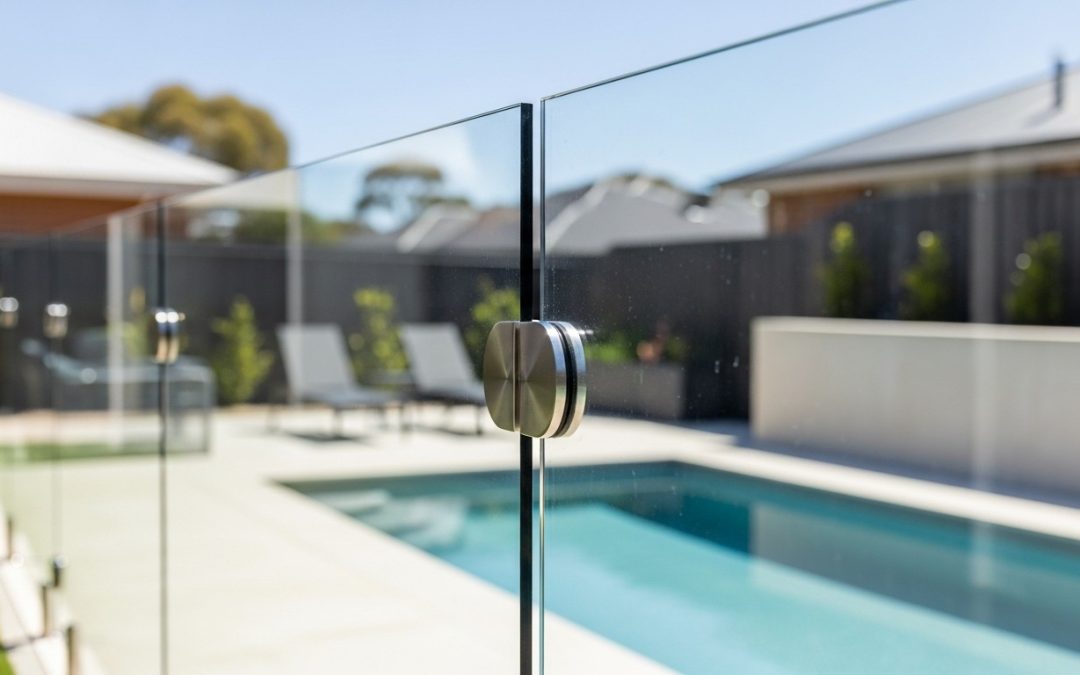
When considering pool fencing for your Adelaide home, understanding the material’s ability to withstand local conditions is crucial. This discussion builds upon the broader topic of frameless glass pool fencing, focusing specifically on how glass and its associated hardware maintain their quality and integrity over time in Adelaide’s unique environment.
Understanding Adelaide’s Climate Challenges for Pool Fencing
Adelaide experiences a distinctive Mediterranean climate, characterized by hot, dry summers and mild, wet winters. These conditions present several challenges for outdoor structures like pool fencing:
- Intense UV Radiation: Summers bring prolonged periods of strong sunlight, which can degrade materials over time.
- High Temperatures: Extreme heat can affect the structural integrity of some materials and finishes.
- Temperature Fluctuations: Significant daily and seasonal temperature swings can cause expansion and contraction, potentially stressing materials.
- Coastal Proximity: For properties closer to the coast, salt spray introduces a corrosive element that can impact metal components.
- Dust and Particulates: Dry conditions can lead to airborne dust, requiring regular cleaning to maintain aesthetics.
The selection of materials and the quality of installation are paramount to ensuring a pool fence remains safe, compliant, and visually appealing despite these environmental factors.
The Resilience of Toughened Glass Panels
The primary component of glass pool fencing is toughened safety glass. This material undergoes a specific manufacturing process that significantly enhances its strength and durability compared to standard annealed glass. During tempering, glass is heated to high temperatures and then rapidly cooled, creating compressive stress on the outer surfaces and tensile stress in the interior. This process makes the glass considerably more resistant to:
- Impact: Toughened glass is designed to withstand significant blunt force impacts, a critical safety feature for pool areas.
- Thermal Shock: The tempering process allows the glass to handle rapid temperature changes without cracking, which is particularly relevant given Adelaide’s potential for hot days followed by cooler nights.
- Scratching: While not entirely scratch-proof, toughened glass offers good resistance to minor abrasions from everyday use and cleaning.
- UV Degradation: Unlike some plastics or painted surfaces, glass inherently resists UV radiation. It does not yellow, become brittle, or degrade in clarity due to sun exposure over time, preserving its transparent aesthetic.
Corrosion Resistance of Stainless Steel Hardware
The longevity of a glass pool fence is not solely dependent on the glass panels themselves; the supporting hardware plays an equally critical role. Spigots, hinges, and latches are typically made from marine-grade stainless steel, most commonly 316-grade.
Many situations involve the use of stainless steel due to its inherent resistance to corrosion, particularly in environments exposed to moisture and salt. The chromium content in stainless steel forms a passive layer on its surface that self-repairs when scratched, protecting the underlying metal from rust. Marine-grade 316 stainless steel is chosen for pool fencing due to its enhanced resistance to chlorides, making it suitable for both chlorinated pool environments and properties near the Adelaide coastline.
However, it is important to note that even marine-grade stainless steel is not entirely maintenance-free. Common scenarios include surface tea staining or minor discoloration, especially in high-salt or high-chlorine environments if not regularly cleaned. What usually causes problems is the accumulation of contaminants on the surface that prevent the passive layer from forming effectively. Regular cleaning with fresh water and a mild detergent helps to remove these deposits and maintain the protective layer, ensuring the hardware retains its structural integrity and aesthetic finish for many years.
Factors Influencing Long-Term Performance
While the materials themselves are robust, several other factors contribute significantly to the overall durability and longevity of a glass pool fence in Adelaide:
- Quality of Installation: Professional installation is paramount. Correct alignment, secure fixing of spigots, and precise fitting of panels prevent undue stress on the glass and hardware. Improper installation can lead to premature wear, instability, or even failure. Ensuring compliance with Australian Standards is a key aspect of this.
- Maintenance Practices: Regular cleaning of both glass panels and stainless steel hardware is essential. This involves removing dust, salt spray, chlorine residue, and other environmental contaminants. Simple cleaning routines can prevent mineral buildup on glass and tea staining on stainless steel, preserving both appearance and structural integrity.
- Adherence to Standards: All pool fencing in Australia must comply with strict safety standards (e.g., AS 1926.1-2012). Products that meet these standards are designed with durability and safety in mind, ensuring they can withstand typical environmental stresses and everyday use.
A balanced perspective acknowledges that even the most durable materials benefit from appropriate care and professional handling. While glass pool fencing is designed for resilience, its long-term performance is a combination of material quality, expert installation, and consistent, simple maintenance.
Longevity Expectations for Glass Pool Fencing in Adelaide
With high-quality toughened glass and marine-grade stainless steel hardware, professionally installed and adequately maintained, glass pool fencing can offer a service life of many decades in Adelaide’s climate. The inherent properties of glass mean it will not rot, rust (the glass itself), or degrade from UV exposure. Stainless steel, with proper care, will also resist corrosion and maintain its strength.
The aesthetic appeal, characterized by unobstructed views and a modern look, is also maintained over this long period, as the materials do not typically discolour or warp. This long-term performance makes glass pool fencing a considered investment for homeowners and a reliable specification for builders and renovators in the Adelaide region.
Maintaining Your Glass Pool Fence for Lasting Durability
Maintaining the durability and longevity of glass pool fencing in Adelaide involves straightforward, regular practices. For the glass panels, a simple wash with soapy water and a soft cloth, followed by rinsing and squeegeeing, helps prevent mineral build-up and keeps them sparkling clear. For the stainless steel hardware, wiping down with a mild detergent and fresh water regularly, especially in coastal or high-chlorine areas, is crucial to prevent surface discoloration or tea staining. Avoiding harsh abrasives or strong chemical cleaners will protect both the glass and the steel finishes. Consistent, gentle care ensures the fence continues to offer both safety and aesthetic appeal for many years.
Frequently Asked Questions
Does Adelaide’s heat affect glass fencing?
Toughened glass is manufactured to withstand significant thermal shock and extreme temperatures, making it highly resistant to cracking or degradation from Adelaide’s hot summers.Will glass pool fences yellow in the sun?
No, toughened glass inherently resists UV radiation and does not yellow, become brittle, or lose clarity from prolonged sun exposure, maintaining its aesthetic.How do I prevent rust on fittings?
Hardware is typically marine-grade stainless steel (316). Regular cleaning with fresh water and mild detergent helps prevent surface tea staining and corrosion, especially near the coast or pools.Is glass pool fencing hard to clean?
Maintaining glass pool fencing is straightforward. Regular cleaning with soapy water and a soft cloth, followed by rinsing, helps keep both glass and hardware in excellent condition.People Also Ask
How long does glass pool fencing last?
High-quality glass pool fencing, made from toughened glass and marine-grade stainless steel, can last for many decades with proper installation and maintenance. The materials are inherently resistant to common environmental degradation factors. This long lifespan is due to glass not degrading from UV or weather, and stainless steel resisting corrosion when cared for.What kind of glass is used for pool fences?
Toughened safety glass is exclusively used for pool fences to meet strict safety standards. This glass is specially treated to be significantly stronger than regular glass and shatters into small, blunt pieces if broken, reducing injury risk. This tempering process enhances its resistance to impact and thermal stress.Can glass pool fences withstand strong winds?
Yes, professionally installed glass pool fences are designed to withstand significant wind loads. The structural integrity comes from the strength of the toughened glass panels and the robust anchoring of the stainless steel spigots, ensuring stability in various weather conditions. Adherence to Australian Standards during installation is critical for wind resistance.Does salt air affect glass pool fence hardware?
Salt air can affect pool fence hardware, but marine-grade 316 stainless steel is specifically chosen for its enhanced resistance to corrosion from chlorides. Regular cleaning is still recommended to prevent surface tea staining and ensure optimal longevity, especially for properties close to the Adelaide coastline. This maintenance helps preserve the protective passive layer on the steel.What maintenance does glass pool fencing require?
Glass pool fencing requires relatively low maintenance, primarily involving regular cleaning. Washing the glass panels with soapy water and rinsing, along with wiping down stainless steel hardware with mild detergent, helps prevent mineral build-up, tea staining, and keeps the fence looking clear and new. Consistent, simple care is key to long-term appearance and durability.Is glass pool fencing safe for children?
Yes, glass pool fencing is designed with safety as a top priority and must comply with strict Australian Standards for pool barriers. The toughened safety glass is highly impact-resistant, and the smooth, climb-resistant surface, combined with self-closing and self-latching gates, helps prevent unsupervised access to the pool area. Professional installation ensures all safety requirements are met.