
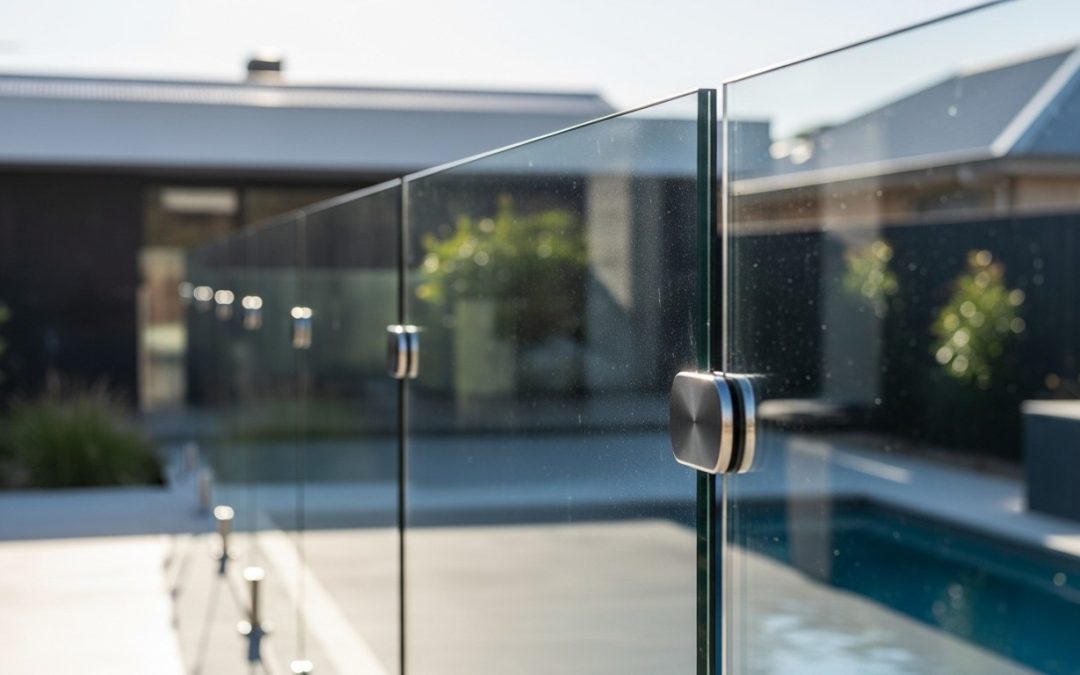
When considering glass balustrades for your Adelaide property, particularly around swimming pools or elevated areas, the choice of materials significantly impacts both safety and longevity. This page delves into the critical components that contribute to robust and visually appealing glass balustrade systems, building upon the broader discussion of glass balustrades. Understanding the types of toughened safety glass, marine-grade stainless steel, and other durable materials used can help homeowners and builders in Adelaide make informed decisions.
The Foundation: Toughened Safety Glass for Balustrades
The glass used in balustrade systems is not just any glass; it is specifically engineered for safety and resilience. Toughened safety glass, also known as tempered glass, is a fundamental component. This type of glass undergoes a controlled thermal or chemical treatment to increase its strength compared to regular glass. Should it break, it shatters into small, relatively harmless granular pieces, reducing the risk of serious injury. This characteristic is crucial for applications like glass pool fencing in Adelaide, where safety standards are paramount.
Understanding Glass Thickness and Standards
For balustrades, glass typically ranges from 10mm to 12mm in thickness, with specific requirements often outlined in Australian Standards, such as AS 1288 (Glass in buildings) and AS 2208 (Safety glazing materials). Thicker glass generally offers greater rigidity and impact resistance, which is vital for maintaining structural integrity. Many situations involve frameless or semi-frameless designs, where the glass itself bears significant load, necessitating appropriate thickness and edge treatment. What usually causes problems is selecting glass that is too thin or not properly toughened for its intended application, leading to potential safety hazards or premature failure.
Laminated Toughened Glass: An Enhanced Option
While standard toughened glass is widely used, laminated toughened glass presents an even higher level of safety. This involves two or more panes of toughened glass bonded together with a clear interlayer, often made of PVB (polyvinyl butyral). If laminated glass breaks, the interlayer holds the fragments in place, preventing them from falling and maintaining a barrier until it can be replaced. This feature is particularly beneficial for balustrades in elevated positions or areas with high foot traffic, offering an extra layer of protection and peace of mind for Adelaide properties.
The Strength Behind the Glass: Marine-Grade Stainless Steel Hardware
The hardware that supports glass balustrades is just as critical as the glass itself. For outdoor applications, especially in coastal cities like Adelaide where salt spray and humidity are factors, marine-grade stainless steel is the material of choice. This refers predominantly to 316-grade stainless steel.
Why 316-Grade Stainless Steel?
316-grade stainless steel contains molybdenum, an alloying element that significantly enhances its corrosion resistance, particularly against chlorides found in salt water and many industrial chemicals. Common scenarios include balustrades around swimming pools where chlorinated water splashes, or properties closer to the Adelaide coastline. Using lesser grades, like 304 stainless steel, in these environments can lead to ‘tea staining’ or even pitting corrosion over time, compromising both aesthetics and structural integrity. The superior resistance of 316-grade ensures the long-term durability and safety of the balustrade system, making it a wise investment for Adelaide homeowners and builders.
Essential Hardware Components
- Spigots: These are the posts or clamps that hold the glass panels in place, often used in frameless glass balustrade systems. They come in various designs, including core-drilled (set into the substrate) or base-plated (bolted onto the surface).
- Standoffs: Used to fix glass panels directly to a wall or fascia, creating a minimalist, floating appearance. These require precise installation to ensure proper load distribution.
- Handrails: While not always mandatory for balustrades with sufficient glass height, a handrail provides additional rigidity and a tactile element. These are typically made from 316-grade stainless steel or sometimes timber, securely fixed to the glass or supporting posts.
- Latches and Hinges: For balustrade systems incorporating gates, such as pool fencing Adelaide, high-quality 316-grade stainless steel latches and hinges are essential for smooth operation, security, and resistance to corrosion.
Other Durable Materials for Longevity
Beyond glass and stainless steel, other materials play a supporting role in the overall durability and performance of a balustrade system.
- Gaskets and Glazing Rubbers: These components, often made from EPDM (ethylene propylene diene monomer) rubber, provide cushioning between the glass and hardware. They absorb vibrations, prevent direct glass-to-metal contact, and accommodate minor thermal expansion, all contributing to the system’s longevity.
- Aluminium Channels: For some balustrade designs, especially those with a channel-set base, robust aluminium channels are used. These are typically powder-coated for enhanced corrosion resistance and aesthetic finish, providing a strong foundation for the glass panels.
- Fixings and Anchors: The screws, bolts, and anchor systems used to secure hardware to the substrate (concrete, timber, steel) must also be of high quality and appropriate for the load and environment. Stainless steel fixings are generally preferred to prevent galvanic corrosion with the balustrade hardware.
Ensuring Longevity, Safety, and Aesthetic Appeal
The careful selection of high-quality glass and hardware directly translates to a balustrade system that is both durable and safe. Using materials that meet or exceed Australian Standards helps ensure compliance with safety regulations, particularly important for pool safety in Adelaide. Durable materials resist degradation from environmental factors like UV exposure, rain, and salt, meaning fewer maintenance issues and a longer lifespan for the balustrade.
From an aesthetic perspective, high-quality materials maintain their pristine appearance over time. Marine-grade stainless steel retains its lustre, and toughened glass remains clear and free from defects, contributing to a modern, sophisticated look that enhances the value and appeal of any Adelaide property. The choice of materials influences how well the balustrade integrates with the surrounding architecture and landscape, offering unobstructed views and a sense of openness.
The Role of Professional Installation
Even the highest quality materials can underperform if not installed correctly. Proper installation, following manufacturer guidelines and Australian Standards, is paramount to ensure the structural integrity and safety of any glass balustrade. This involves precise measurements, correct fixing methods, and adherence to specific load-bearing requirements, ensuring the system performs as intended for years to come.