
When planning for new glass balustrades in Adelaide, whether for a pool area, balcony, or staircase, the initial site assessment and subsequent accurate measurement are foundational steps. These processes are critical for ensuring not only the visual appeal of the final installation but also its structural integrity and compliance with local regulations. This page focuses specifically on these crucial preliminary stages, building upon the broader discussion of glass balustrades found on our main glass balustrades page.
The Critical Role of Site Assessment in Adelaide Balustrade Projects
A professional site assessment is more than just a preliminary visit; it’s a comprehensive evaluation of the environment where the glass balustrade will be installed. For homeowners in Adelaide, understanding this stage helps in appreciating the complexity and precision involved. For builders and renovators, it underscores the need for thorough preparation that goes beyond basic architectural plans.
Key Aspects of a Professional Site Assessment
-
Structural Integrity of Mounting Surfaces: Before any measurement, the supporting structure must be evaluated. This includes checking the slab edge, decking, or wall for sufficient strength to support the weight and forces exerted on the glass balustrade. Many situations involve assessing the concrete slab thickness, the condition of timber bearers for decks, or the type and integrity of masonry walls. What usually causes problems is an insufficient substrate that cannot securely anchor the balustrade posts or spigots, leading to potential safety issues later on.
-
Gradient and Levels: Rarely is a site perfectly level. A professional assessment accounts for subtle slopes, uneven ground, or varying deck heights. These variations directly influence how glass panels need to be cut and how posts are installed to maintain a uniform top line and prevent unsightly gaps. Common scenarios include sloped pool surrounds or multi-tiered entertainment areas that require careful planning for step-downs or raked panels.
-
Obstructions and Services: Identifying existing features like drainage pipes, electrical conduits, irrigation lines, or utility access points is vital. These can impact post placement or require specific mounting solutions. For example, a hidden irrigation line might necessitate a different post footing, or a nearby downpipe could influence the panel size and layout. Ignoring these can lead to costly damage or re-work.
-
Drainage Considerations: Proper water flow around the base of the balustrade is important, especially in outdoor areas like pool surrounds. The assessment considers how water will drain to prevent pooling against the glass or its fixings, which can lead to staining or long-term issues. This might involve noting existing drainage solutions or suggesting adjustments to the base structure.
-
Compliance with Local Regulations: In Adelaide, all glass balustrade installations, particularly those around swimming pools, must adhere to specific Australian Standards and local council bylaws. The site assessment includes a review of these requirements to ensure the proposed design will meet safety heights, gap tolerances, and gate specifications. This is crucial for obtaining necessary certifications and ensuring pool safety.
The Imperative of Accurate Measurement for Custom Glass Panels
Once the site assessment identifies all the constraints and opportunities, precise measurement becomes the next critical step. Glass balustrades, especially frameless or semi-frameless designs, rely heavily on custom-cut glass panels. Minor discrepancies in measurement can have significant consequences.
Why Precision in Measurement Matters
-
Ensuring a Perfect Fit: Glass panels are typically manufactured to exact specifications based on site measurements. Even a few millimeters of error can result in panels that are too large or too small, leading to improper installation, aesthetic flaws, or safety compromises. Custom glass for balustrades cannot be easily adjusted on-site.
-
Minimizing Gaps and Maximizing Safety: Accurate measurements allow for consistent, minimal gaps between panels and between panels and structural elements. This not only contributes to a sleek, contemporary look but also enhances safety by preventing small children or pets from slipping through openings that exceed regulatory limits. Furthermore, it helps maintain the integrity of the barrier against accidental impacts.
-
Preventing Costly Errors and Delays: Incorrect measurements almost always lead to re-ordering custom glass panels, which incurs additional material costs, fabrication fees, and significant delays in project completion. This can be particularly impactful for builders working on tight schedules or homeowners eager to use their new pool area.
Tools and Techniques for Meticulous Measurement
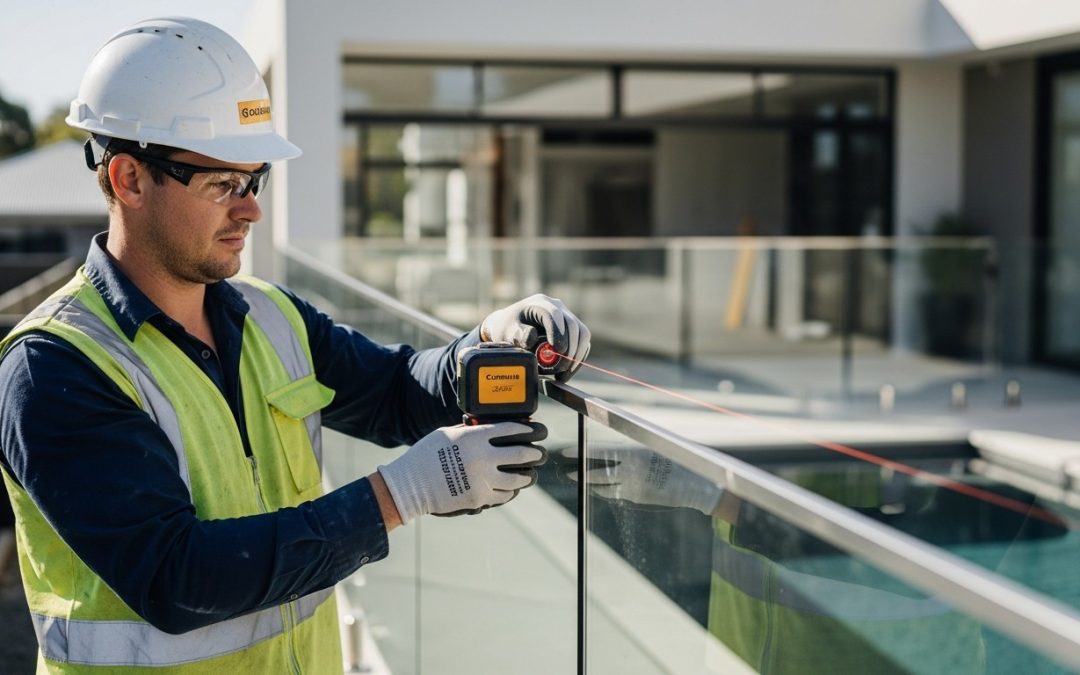
Professional measurement involves more than just a tape measure. It often includes laser levels, digital measuring devices, and specialized templates to capture exact dimensions, angles, and elevations. Measurements are typically taken multiple times and cross-referenced to eliminate human error. Detailed diagrams and photographic records are often created to ensure clarity for the fabrication team.
Common Challenges in Measurement and How They’re Addressed
-
Uneven Surfaces: Measuring on a slight slope or an undulating surface requires specialized techniques to ensure that the top rail remains level (or follows a consistent rake) and panel heights are appropriate. This often involves establishing a datum point and measuring all other points relative to it.
-
Existing Structures: Integrating new glass balustrades with existing walls, columns, or landscaping features demands careful measurement to ensure seamless transitions and avoid awkward cut-outs or excessive gaps. This might involve scribing panels to fit irregular surfaces.
-
Complex Angles: Corners, curves, or multi-faceted designs require precise angle measurements. An experienced installer understands how to accurately capture these complex geometries to ensure that adjoining glass panels meet perfectly without creating unsafe or unsightly junctions.
The expertise brought by experienced fencing installers in Adelaide during both the site assessment and measurement phases is invaluable. It’s a process that combines technical skill, an understanding of materials, and a deep knowledge of safety standards to deliver a secure and visually appealing glass balustrade installation. This meticulous approach is what ensures long-term satisfaction and adherence to pool safety standards for homeowners and provides reliable outcomes for builders and renovators.